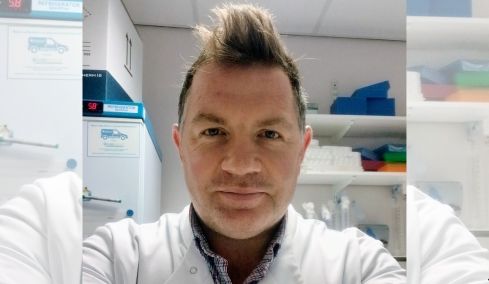
We’re delighted to welcome David Bartlett to the Fountain Centre as one of our new trustees.
David brings a wealth of knowledge and experience in cancer research, exercise science and leadership, alongside a genuine passion for improving the lives of people affected by cancer. We asked David five questions to find out what inspired him to join us, what he hopes to contribute and a little more about the person behind the professional.
What inspired you to become a trustee for the Fountain Centre?
David has spent around 12 years studying how lifestyle interventions can improve wellbeing, quality of life and physical fitness in people living with cancer. Through his work, he sees first-hand how research and lifestyle interventions can make a meaningful difference to people's lives.
He has long admired the Fountain Centre's commitment to providing practical, emotional and psychological support to people affected by cancer. Becoming a trustee was a natural opportunity to give something back to the local community and support a charity that makes a genuine difference during some of life's most challenging times.
What part of our work resonates with you the most?
For David, it's the Fountain Centre's holistic approach to care.
He believes that support goes far beyond medical treatment, recognising the importance of emotional wellbeing, resilience, exercise and lifestyle in helping people maintain a sense of normality and control.
He particularly values the fact that the Fountain Centre supports not only people living with cancer, but also their loved ones — reflecting the compassionate, person-centred approach at the heart of everything we do.
What skills and experience do you hope to bring to the charity?
David is a Senior Lecturer in Exercise Immunology at the University of Surrey. Throughout his career, he has developed experience in leadership, governance, research, project management and strategic planning.
Having worked with a wide range of stakeholders and managed complex projects, he hopes to bring these skills, alongside his commitment to evidence-based practice, to help support the Fountain Centre's continued growth and impact.
What are you most looking forward to getting involved with?
David is particularly looking forward to getting to know the people who make the Fountain Centre such a valued resource — our staff, volunteers, supporters and service users.
He's excited about contributing to the charity's future direction, helping to strengthen its impact in the community and supporting opportunities that enable even more people to benefit from our services.
Tell us something about you that people might not expect!
Away from his work in cancer research, David enjoys exploring new cities and discovering places he hasn't visited before, whether overseas or closer to home. London, he admits, is taking a particularly long time to explore!
He's also a keen mountain biker, although he confesses that the hills and trails of southern England don't always compare favourably with those back in his native Scotland.
And when he's not outdoors, you might find him following US college sports or enjoying anything Star Wars-related. From NCAA game days to discussions about the latest Star Wars series, David is always happy to talk sport, science fiction — or both!
Welcome to the team, David!
We're delighted to have David on board and look forward to working with him as we continue to provide compassionate, holistic support to people affected by cancer and their loved ones.
Thank you, David, for choosing to share your knowledge, experience and enthusiasm with the Fountain Centre.

Why Choose the Fountain Centre as Your Charity of the Year?
Choosing a Charity of the Year is one of the most rewarding decisions a business can make. It gives your team a shared cause to rally behind, strengthens your links with the local community, and makes a real difference to people who need support. For businesses in Surrey and the surrounding areas, partnering with the Fountain Centre means helping local people affected by cancer, possibly including your own colleagues, customers and their families.
Who We Are
The Fountain Centre is an independent charity based in The Royal Surrey Cancer Centre at the Royal Surrey Hospital in Guildford. We support cancer patients, their families and carers from diagnosis, through treatment and beyond. Our services include complementary therapies, emotional and psychological support, a wig service, information and signposting, and our Children and Family Service, which supports families when a parent has been diagnosed with cancer.
Our services are donation-based. We ask for a suggested donation, but nobody is ever turned away because they cannot afford to give. That is only possible thanks to the generosity of individuals, community groups and local businesses.
A Cause That Brings Your Team Together
Cancer touches almost everyone at some point, whether directly or through someone they love. Supporting a local cancer charity gives your team a cause that feels personal and meaningful. Fundraising together, whether through a sponsored walk, a bake sale or a team challenge, builds connections between colleagues and gives everyone something to be proud of.
Making a Real Difference Locally
When you focus your support on one charity for a year, your contribution goes further. For a small charity like ours, a Charity of the Year partnership can help fund therapy sessions, counselling for patients and families, and support for children coping with a parent's diagnosis. You'll be able to see the difference your support makes, right here in your own community.
Showing What Your Business Stands For
Customers and employees increasingly want to know that the businesses they choose care about more than profit. A partnership with the Fountain Centre shows your commitment to your local community and to the wellbeing of people facing one of life's hardest challenges. It can also help attract and keep staff who want to work somewhere that gives back.
Supporting Your Own People
Many employees will be affected by cancer during their working lives, either through their own diagnosis or that of a family member. A partnership with us can raise awareness within your workplace of the support available, helping colleagues know where to turn if they ever need us.
A Partnership That Grows Over Time
As a small charity, we value lasting relationships with our supporters and are happy to shape a partnership that works for you. Some businesses like to be closely involved, while others prefer a lighter touch. Either way, we'll work with you to make your year with us as rewarding as possible.
How We Can Work Together
• Ideas, advice and support for your fundraising activities
• Visits or talks from our team to share more about our work with your staff
• Opportunities to get involved with our events
• Information to help you support employees affected by cancer
• Recognition of your support through our website and social media
Get In Touch
If you'd like to find out more about making the Fountain Centre your Charity of the Year, please contact Susan Jordan at
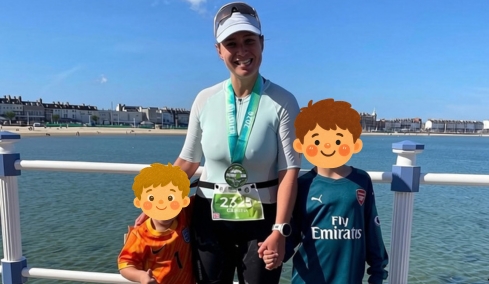
Gemma Takes on IRONMAN 70.3 and Raises Over £2,750 for the Fountain Centre
6 hours 49 minutes. A 1.2-mile swim. A 90K bike ride. A half marathon. And over £2,750 raised for the Fountain Centre.
Our Exercise Service Lead, Gemma Harris, has completed the incredible challenge of an IRONMAN 70.3 — and what an achievement it was!
After months of training, Gemma crossed the finish line in an amazing 6 hours and 49 minutes.
Her race included:
- Swim: around 40 minutes
- 90K bike: 3 hours 35 minutes
- Half marathon: 2 hours 19 minutes
- Plus transitions between each discipline
As Gemma puts it, it was “every bit as tough as I expected (and possibly a little tougher!)” — but she did it!
Raising money for the Fountain Centre
While completing such a huge personal challenge was an incredible achievement, Gemma's motivation went far beyond the finish line.
Through her fundraising, she has raised over £2,750 for the Fountain Centre, helping us continue to support people affected by cancer.
Gemma said:
“The Fountain Centre means an enormous amount to me, so knowing that all those hours of swimming, cycling and running have also raised money to support people affected by cancer makes it even more worthwhile.”
We are incredibly grateful to everyone who supported Gemma throughout her challenge. From donations to messages of encouragement, every bit of support helped keep her going through the months of training and on race day.
A challenge that brought people together
One of the things that has meant the most to Gemma has been the incredible response from people around her.
She was particularly touched to receive donations and messages from people she hadn't seen or worked with for months — and in some cases, years.
“It's been so lovely to reconnect with people through this slightly crazy challenge!”
It’s a wonderful reminder that fundraising challenges can bring people together in unexpected ways, while helping to make a real difference to others.
Thank you for your support
Gemma would like to say a huge thank you to everyone who donated, sent messages, followed her training journey or simply cheered her on from the sidelines.
Together, you helped raise over £2,750 for the Fountain Centre.
From all of us at the Fountain Centre, thank you, Gemma — and congratulations!
And as for another IRONMAN 70.3?
Gemma says she’s “definitely not in a rush” to do anything like that again!
If you'd like to keep up to date with Gemma and the Fountain Centre, you can subscribe to our newsletter at the bottom of our website. We’d love to keep you connected with our latest news, fundraising events and challenges.
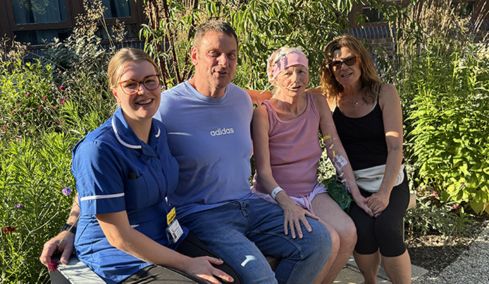
Some stories stay with you. This is one of them.
In June, our Wellbeing Garden became the setting for a wedding — one held not in the usual sense of the word, but with just as much love, meaning, and joy. Lee and Debbie Godbold had been together for 36 happy years when Debbie, receiving treatment for stage 4 lung cancer, was admitted to hospital. Rather than wait, they decided the time had come to finally make it official.
Thanks to the quick thinking and kindness of hospital staff, registrars, and the team here at the Fountain Centre, a wedding that might easily have been impossible came together within hours — culminating in a ceremony beneath the wisteria in our Wellbeing Garden.
Lee has generously shared the full story of that day in his own words, and we're honoured to share it with you here.
In Lee's own words:
We had originally hoped to marry in April 2026, but Debbie's readmission to hospital meant it could not go ahead.
She had been so brave throughout the rollercoaster that followed her diagnosis with stage 4 ALK-positive lung cancer in June 2025. Debbie had complete faith in the Lung Cancer Team, particularly Dr Attia, Rachel, Princess and Gillian, who were all wonderful throughout her care. She continued to believe in the treatments and remained optimistic until the very end.
Her passing came far sooner than either of us expected, as we genuinely believed we had more time together. After 36 very happy years, we had both agreed that we should not leave it any longer and wanted to make that final commitment to one another. It was not only because of Debbie's illness, but because we had come to realise that none of us truly knows what may be around the corner.
At around 4.00pm on 19th June, I contacted Guildford Register Office on the off chance that there might still be an opportunity for us to give notice. Dr Attia had personally delivered the necessary letter earlier that day, so we had everything we needed in place. I even had a Pandora dress ring in the car, which I had given Debbie for Christmas so that we could use it to help size our wedding bands.
Mike at Surrey County Council received my email and telephoned me just ten minutes later. He put me straight through to Lucy, the Deputy Superintendent Registrar, who explained, much to my surprise, that she could come to the hospital and marry us in just an hour and a half.
Debbie was understandably shocked when I shared the news. Her first reaction was, "Oh no," which I am sure was because she felt she needed more time to prepare! With Lucy still waiting on the phone, and after a little gentle reassurance, Debbie changed her mind and announced, "Oh, go on then." We had our answer, and everything began to fall into place.
The nurse in charge, Sister Isabelle "Izzy" Sarjudeen, had already given permission for us to marry on the ward. She then told us that she could help move Debbie into the Wellbeing Garden and would also be one of our witnesses. This was such wonderful news. Simply being able to take Debbie outside on such a beautiful day felt incredibly special, even though at that point I had never seen the garden.
Debbie's sister Paula then arrived and was thrilled to discover that she would also be a witness. Shortly afterwards, Lucy and Rosie, the Deputy Registrar, joined us, and the six of us made our way to the Wellbeing Garden for the ceremony.
We joked that the wave of heat as we left the hospital felt like arriving on honeymoon. It reminded us of the warmth that hits you when the aircraft doors open after landing in Ibiza.
Stepping into the garden was magical. It was so beautiful that we could have been anywhere in the world. It offered a complete escape from the hospital environment and made our marriage even more meaningful.
The timing was perfect. It was around 6.00pm, the sun was still shining, and there was a gentle breeze. We sat together on a bench beneath a beautiful flowering wisteria, surrounded by the scent of the garden flowers. It was the most perfect moment, and we were both completely captivated by the experience.
Lucy, Rosie and Izzy were all so kind, and as the photographs show, Debbie and I were overjoyed to finally tie the knot. Even while she was so unwell, Debbie still radiated love, kindness and compassion.
Izzy filmed a short video of the ceremony and took some wonderful photographs. I now realise just how priceless they are as reminders of that beautiful occasion.
I will always be deeply grateful that we were given access to such a special place, and to Izzy, Lucy, Rosie and Paula for helping to make our marriage happen at such short notice.
Thank you to the Fountain Centre for allowing us to use this beautiful space, the Wellbeing Garden. I will continue to visit for as long as it remains, to reflect on and remember one of the most treasured moments of my life.
With love from Mr Lee Godbold and Mrs Deborah Ann Godbold, married 19th June 2026. xx